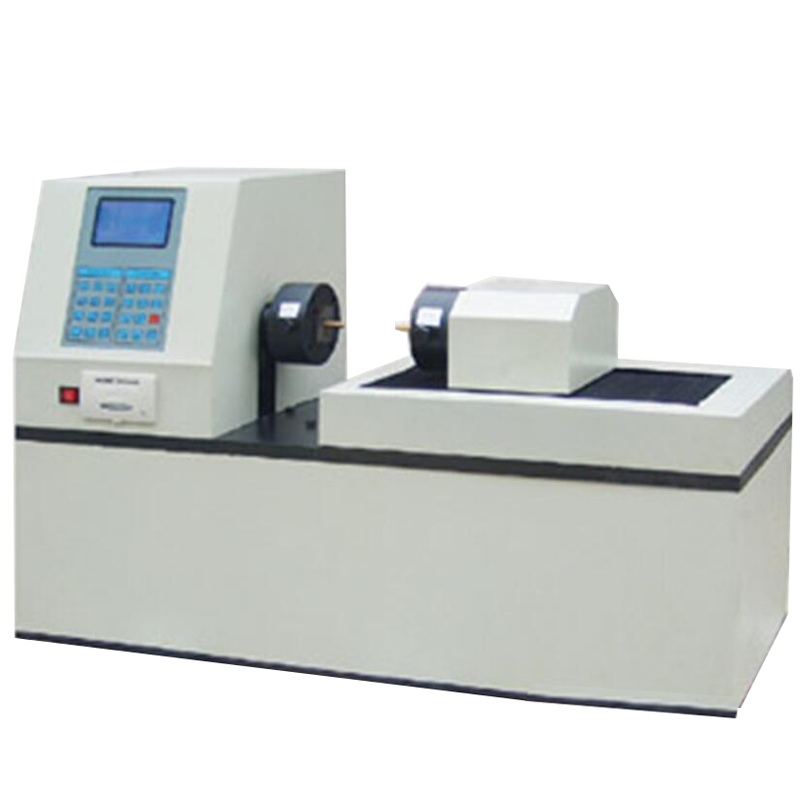

1. Introduction and application - torsion testing machine
lMainly used to test torsion force, torsion angle and angle stiffness for various materials and record test data. If equipped with proper accessories, it can complete torsion tests for other elements, members, and bolts.
lThis machine is composed of a loading system, transmission system, data acquisition, processing, control, and display system, etc. It adopts a horizontal structure, a minicomputer CPU controller, and a 240*128 lattice liquid crystal display for intuitive information display and multi-key operation. It uses a digital data acquisition and processing system to display torque and torsion angle, and a photoelectric encoder to acquire torsion angle, along with a high-accuracy torsion sensor to acquire torque.
lLoading mode: automatic loading mode by motor.
lAll the above parameters can be calculated automatically through the mini controller according to the test parameters which are set before the test, and meanwhile, test results can be displayed and automatically saved. All parameters can be both inquired and printed.
lIf equipped with special grips, it can perform torsional force, torsional angle, and angle stiffness for metals and rubber cohesive layers.
2. Main technical parameters - torsion testing machine
| 1 | Max torque | 100Nm |
| 2 | Measuring range of torque | 2Nm-100Nm |
| 3 | Torque resolution | 1/±200000 |
| 4 | Relative error of indicating value of torque | 1% |
| 5 | Torsion angle resolution | 0.01° |
| 6 | Torsion speed | 0-360°/min |
| 7 | Relative error of torsion speed | Within±1% of set value |
| 8 | Max distance between grips | 300mm |
| 9 | Axiality of two grips | Less than φ1.0mm |
| 10 | Central height of main axis | 170mm |
| 11 | Power | 0.4kW |
| 12 | Voltage | 220V±10% 50Hz |
| 13 | Dimension | 900X320X1100mm |